Erythromycin Price Trend and Forecast
Erythromycin Regional Price Overview
Get the latest insights on price movement and trend analysis of Erythromycin (DDGS) in different regions across the world (Asia, Europe, North America, Latin America, and the Middle East & Africa).
Erythromycin Price Trend for the First Half of 2025
In the first half of 2025, the price trend for erythromycin remained relatively stable with minor fluctuations influenced by broader market events rather than changes in the drug’s direct supply chain. Being a generic antibiotic, erythromycin continued to be one of the more affordable prescription options, especially compared to brand-name drugs. Patients with insurance typically saw lower out-of-pocket costs, while those without coverage had to shop around or use discount programs to find the best deals.
Erythromycin Price Chart
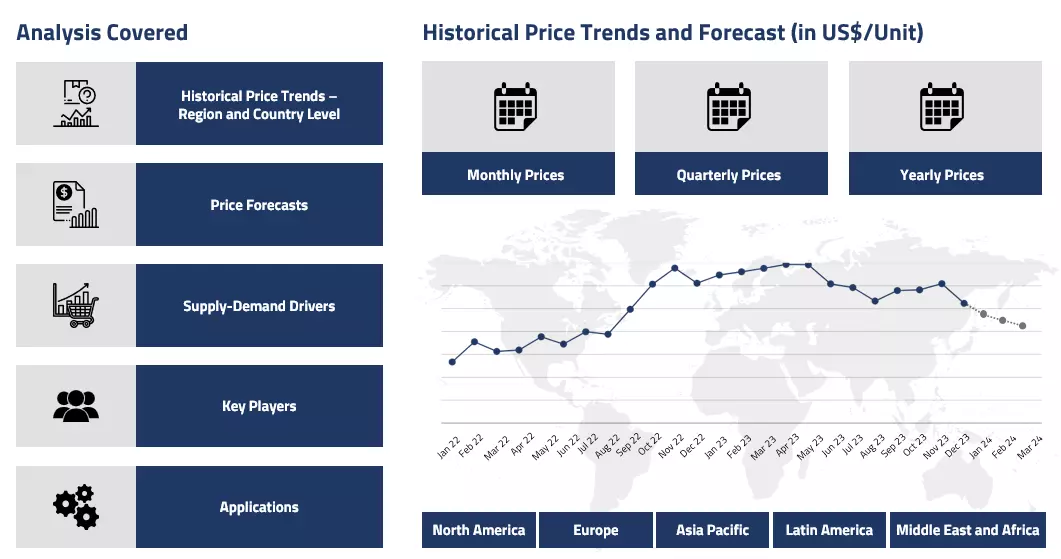
Please Login or Subscribe to Access the Erythromycin Price Chart Data
Public attention toward prescription drug costs increased sharply following President Trump's May executive order aimed at reducing U.S. drug prices. However, since erythromycin is a generic drug and already among the cheaper antibiotics, the executive order had little immediate impact on its pricing. Most changes in the pharmaceutical sector at that time centered around higher-cost, brand-name medications.
Analyst Insight
According to Procurement Resource, Erythromycin prices are expected to stay stable, with any potential changes more likely to result from insurance policy shifts or supply chain factors rather than federal pricing reforms.
Erythromycin Price Trend for Q4 of 2024
In Q4 2024, the Erythromycin price graph remained stable with minimal to no fluctuations across global markets. Although regional price variations were observed, overall pricing remained steady due to the highly regulated nature of the antibiotic market. In India, an expert panel recommended the ban of 16 additional fixed-dose combinations (FDCs) in early October, following restrictions on 156 FDCs in the previous quarter. This development had a negative impact on the market, prompting industry players to adopt a cautious stance during the period. Market participants awaited clear government guidelines; however, no such directives were announced.
Towards the end of the quarter, a seasonal slowdown during the Christmas and New Year holidays led to temporary shutdowns of pharmaceutical companies in various regions, pausing manufacturing activities for a brief period.
Analyst Insight
According to Procurement Resource, the erythromycin price graph is expected to show similar trend in the near future; however, government policy changes may affect the antibiotics market but any dramatic rise in the prices is not anticipated.
Erythromycin Price Trend for Q3 of 2024
In Q3'24, the prices of erythromycin showed regional variations influenced by government policies and market dynamics. They remained stable throughout the quarter with marginal fluctuations. In a recent development, the Indian Health Ministry has banned 156 fixed-dose combination (FDC) medicines, including common antibiotics, painkillers, and multivitamins, due to associated health risks. On August 2, a notice was released prohibiting the production, marketing, and distribution of the listed medications. The FDC has not banned such a large number of drugs since 2016. The action was taken as a follow-up to recommendations from an expert committee and the Drug Technical Advisory Board (DTAB).
The banned FDCs lacked therapeutic justification and posed more harm than benefit to patients. FDC (Fixed dose combinations) of Erythromycin stearate eq.to Erythromycin +Lactic acid Bacillus were among the many banned formulations. This will hurt the market sentiments of the drug as step was welcomed as a positive step towards patient safety. The demand of erythromycin was affected temporality as the market entered wait and see attitude after the announcement. Many producers and traders of banned drugs are contemplating how to handle their existing stockpiles of already manufactured products. The decision has also spurred some enthusiasm in the market as new drugs are to be formulated in place of banned ones.
Analyst Insight
According to Procurement Resource, the prices are expected to remain stable, and not much change is predicted for the upcoming quarter as drug markets are subject to rigorous state regulations.
Erythromycin Price Trend for Q2 of 2024
In recent developments regarding erythromycin prices, various regions have experienced fluctuations due to different market dynamics. In India, prices saw some relaxation as the government reduced costs for erythromycin and other essential medicines, covering drugs for cardiovascular diseases, diabetes, and more. This effort aimed to improve affordability and included price cuts for medications like hydrochlorothiazide tablets, atorvastatin, and povidone-iodine ointments.
Additionally, ceiling prices for 923 drug formulations and retail prices for 65 formulations were adjusted based on the wholesale price index (WPI). In Europe, erythromycin prices remained stable, but supply chain issues and shipment availability were significant concerns. A coalition of six countries warned against excessive national stockpiling, which could lead to shortages, and urged for coordinated strategies to maintain solidarity.
Meanwhile, in North America, erythromycin prices remained consolidated amidst discussions on high drug and healthcare costs. The U.S. Federal Trade Commission (FTC) highlighted that consolidation in the pharmacy and health insurance sectors allowed pharmacy benefit managers (PBMs) to control prescription drug prices, negatively affecting smaller pharmacies and consumers by managing 79% of prescription drug claims. Overall, erythromycin prices didn’t see much fluctuation in the global markets during the second quarter of the year 2024.
Analyst Insight
According to Procurement Resource, since the pharma markets are highly regulated in most countries, not much predictable change is expected in Erythromycin prices going forward in the next quarter.
Erythromycin Price Trend for Q1 of 2024
The pricing patterns of drugs such as erythromycin have undergone a number of changes since Q4 of 2023, and thus, the challenges persisted in Q1 of 2024. The drug pricing, often opaque, is typically based on the average wholesale price (AWP) minus discounts adjusted by pharmacy benefit managers (PBMs). However, generic drug pricing based on AWP can vary widely, making it difficult to assess the fluctuations in its market dynamics. Additionally, AWP increases often outpace discounts, resulting in price hikes of antibacterial medications such as erythromycin.
The National Average Drug Acquisition Cost (NADAC), therefore, emerged as a more accurate reflection of retail pharmacy drug costs in the past few quarters in the North American markets. However, while simpler pricing models are being adopted, their effectiveness in generating economic pricing values for consumers remains uncertain.
Concerns also arose regarding potential cost-shifting from the persistent Medicare negotiations, which further altered the pricing trajectory of erythromycin in the American markets. Despite potential challenges, the emergence of clearer pricing structures signifies a significant shift in the prescription drug landscape and might benefit the erythromycin pricing trajectory in the next quarters.
Analyst Insight
According to Procurement Resource, the price trend of Erythromycin is expected to rise in the next quarter as the global surge in the pricing of certain medications from April 1 and the rise in the cost of production will escalate the pace of northward movement of erythromycin prices.
Erythromycin Price Trend for Q4 (October - December) of 2023
Given a 14% medical inflation rate, the Indian population grapples with substantial healthcare expenses, creating a chronic economic burden. This underscores the need for comprehensive healthcare solutions, including capping the cost of essential and non-essential drugs to provide better access to the general populace.
Hence, in view of the overall 5-6% hikes in the domestic pharmaceutical sector, the Supreme Court asked the government to disclose its mechanism for controlling life-saving and essential drug prices addressing concerns about super-profits, exclusion of critical medicines, and insufficient consultation. In order to ensure affordability and control the recent price hikes, the Indian National Pharmaceutical Pricing Authority (NPPA) has brought 33 fixed-dose combination drugs under regulation in order to curb medical inflation and pharmaceutical prices, including those of antibiotics like Erythromycin.
In the US domestic market, the Inflation Reduction Act, which aims to lower drug costs, requires rebates if prices rise faster than inflation. It emphasizes fair pricing for drugs and aims to negotiate lower prescription prices. However, companies like Merck, Bristol-Myers Squibb, and Johnson & Johnson are resisting the Biden's administration drug price negotiation program.
Multiple lawsuits challenging the program's constitutionality are in progress, with the industry arguing against unprecedented constraints on drug prices. Recently, pharmaceutical companies planned to raise prices on over 500 drugs, including Erythromycin, in January 2024. The expected hikes precede the Biden Administration's publication of discounted prices for ten high-cost drugs.
Analyst Insight
According to Procurement Resource, the price trend of Erythromycin and other pharmaceuticals are likely to remain under strain in the coming quarter, given the current tiff between pharmaceutical giants and the US administration over the Inflation Reduction Act. While legal experts predict prolonged battles, the administration's aggressive stance on drugs adds complexity to the ongoing disputes.
Erythromycin Price Trend for Q3 (July - September) of 2023
Erythromycin is one of the most used types of antibiotics in the medical world. Since erythromycin is a generic drug, various brands and companies have it in different packaging and compositions. It is produced by the soil bacterium Streptomyces erythraeus, and the mode of action is by killing bacteria by stopping its protein production.
Growing bacterial resistance against erythromycin is becoming a challenge for the healthcare world, but the consumption of erythromycin is still at a high level. During the discussed period of Q3’23, the prices wavered at the existing high levels, and narrow-ranged fluctuations were observed. Owing to its essential nature of requirement, the current inflation and interest rates promoted the sellers to increase their quotations in order to cushion their profits. Overall, the market remained anchored during the said time.
Analyst Insight
According to Procurement Resource, the erythromycin price trend are likely to fluctuate within a narrow range going forward, given the current pricing and market fundamentals.
Erythromycin Price Trend for the First Half of 2023
The price trend of erythromycin followed an inclining trajectory in the US and European region in the first two quarters. The market activities of erythromycin were supported by growth in sales of pharmaceuticals and other related end-user industries. The pressure of inflation also eased out during this time, which resulted in the rise of confidence of consumers that, in turn, supported the positive movement of consumption rates.
The rise in demand also eased out the increasing inventory levels, and with a crunch in the supply, many producers only supplied erythromycin for export orders, which was another reason for the rise in the price trend of erythromycin. The overall growth in the cost of energy production due to the ongoing Russia-Ukraine crisis further escalated the growth of the erythromycin price trend.
Analyst Insight
According to Procurement Resource, the price of Erythromycin is estimated to rise with the high demand from the end-user industries and lower rates of production.
Procurement Resource provides latest prices of Erythromycin. Each price database is tied to a user-friendly graphing tool dating back to 2014, which provides a range of functionalities: configuration of price series over user defined time period; comparison of product movements across countries; customisation of price currencies and unit; extraction of price data as excel files to be used offline.
Our Clients


Procurement Resource Database

Turn price intelligence into action with the Procurement Resource Database. Log in or subscribe to unlock live price trends, historical charts, supplier databases, cost curves, and analyst-backed insights across chemicals, agriculture, energy, packaging, and more. Use these tools to benchmark your contracts, plan budgets with confidence, and stay ahead of market moves on every product you buy.
Erythromycin Dashboard Inclusions

0
+Products
0
+Regions
0
+Subscriptions
Our Price Analysis Methodology


Schedule A Demo
Experience how Procurement Resource transforms raw material price data into clear, decision ready intelligence. Optimise your performance with reliable, expert market data and analysis. Schedule your demo today to experience a live walk-through where our experts will showcase interactive price charts, forecasted prices, and insights driving the prices for your key commodities, tailored to your workflows. Contact us now!
Our Team will be happy to assist you
We are just a text away
Still Need Help ?
Europe & Africa
+44 7573 171117
Sales@prourementresource.com
USA & Canada
+1 307 363 1045
Sales@prourementresource.com
APAC
+91 8850629517
Sales@prourementresource.com
Subscription Plans
Unlock full access to Procurement Resource's price databases, interactive charts, and short-term forecasts for thousands of commodities. Elevate your sourcing decisions by comparing prices across regions, downloading historical data, and layering in analyst-backed insights, all with our flexible plans that scale as your portfolio grows.
Still have any Questions
Contact Us


Price Trend Dashboard - What's Included
Price trends across a diverse portfolio of categories and products, spanning board to niche chemicals
Coverage extendable to grade-specific chemicals based on procurement requirements
Regular price tracking supported by robust historical datasets
News, policy updates, and key market drivers impacting price movements
Short-term and long-term price outlooks and forecasts
Supply–demand dynamics and capacity-driven market analysis
- Unlimited Users
- Historical Monthly Price
- USA, Europe, APAC Covered
- Monthly Forecast
- 12 Months validity
- News & Events
- 50 Products (Refer Next Page For List)
Why Procurement Database

Assistance from Experts
Throughout 2024, the Asian acetoin market experienced fluctuating trends with regional variations. Q1 began with moderate price increases driven by supply constraints from Chang Chun Plastics' maintenance shutdown in Taiwan. Post-S...

Client's Satisfaction
Throughout 2024, the Asian acetoin market experienced fluctuating trends with regional variations. Q1 began with moderate price increases driven by supply constraints from Chang Chun Plastics' maintenance shutdown in Taiwan. Post-S...

Assured Collaboration
Throughout 2024, the Asian acetoin market experienced fluctuating trends with regional variations. Q1 began with moderate price increases driven by supply constraints from Chang Chun Plastics' maintenance shutdown in Taiwan. Post-S...
Global Insights
Throughout 2024, the Asian acetoin market experienced fluctuating trends with regional variations. Q1 began with moderate price increases driven by supply constraints from Chang Chun Plastics' maintenance shutdown in Taiwan. Post-S...
1/4